
Should USL Compete With MLS?
The question of whether USL should compete with MLS comes up more and more, usually framed as a choice. As if USL could decide to stay in its lane and avoid a fight.
That option disappeared the moment MLS created MLS Next Pro.
By launching its own third division professional league, MLS made a deliberate move into territory USL had occupied for years. Whatever the original intent, the practical effect was clear. MLS was no longer just the top division. It was now competing directly for clubs, markets, players, and attention at the lower professional levels. At that point, USL stopped having the luxury of strategic patience.
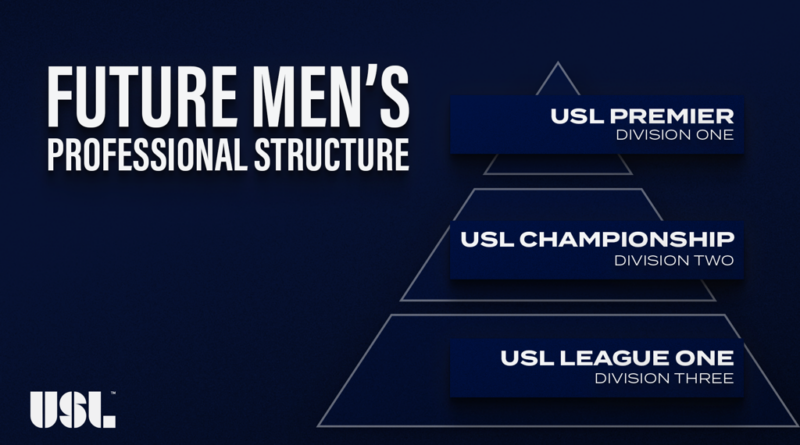
By the time USL Premier launches, Major League Soccer will have more than a thirty year head start at the Division I level. MLS has infrastructure, institutional knowledge, commercial relationships, and a level of stability that only time can build. Any attempt by USL to match MLS on quality, scale, or polish in the short term is unrealistic.
United Soccer League is not starting from nothing, but it is starting later. A future USL Premier division is going to look rough around the edges for a long time. In many ways, it will probably resemble early MLS. Uneven quality. Financial missteps. Clubs that struggle or disappear. That phase is not a failure. It is the cost of trying.
The key difference is not quality in year one or even year ten. The difference is structure.
By committing to promotion and relegation, USL is not trying to be a better version of MLS. It is trying to be a different thing altogether. A system where clubs from smaller markets can climb based on sporting merit. A structure where communities across the country can plausibly imagine top level soccer without being on a short list of approved markets.
That does not make USL superior today. It makes it potentially more compelling over time.
This is not a short term play. Expecting USL Premier to rival MLS in quality or relevance in the next few years misses the point. Even a decade from now, the gap may still be significant. Systems take time to mature, especially open ones. Early MLS spent years finding its footing, and it did so with advantages USL does not have.
Yet each year will make USL’s model stronger. Each new club, each promotion race, each survival battle adds meaning that cannot be manufactured. Over fifteen or twenty years, that starts to matter more than initial polish.
Just as importantly, USL does not really have a choice.
Doing nothing while MLS expands downward is not neutrality. It is retreat. If MLS controls Division I, increasingly dominates Division III and later adds a Division II, USL risks being squeezed out of relevance entirely. Standing still in that environment is not cautious. It is existentially dangerous.
Competing with MLS is risky. It will be messy. There will be mistakes, bad optics, and real financial pain along the way. But the alternative is slow decline.
USL does not need to beat MLS. It needs to survive long enough to become something different. Promotion and relegation gives it that chance. Not quickly. Not cleanly. But credibly.
The mistake would be expecting overnight transformation. The opportunity is thinking in decades instead of seasons.
