The Case for a USL Return: Lehigh Valley
This is the first article in a series taking a second look at former USL markets and weighing their future potential. Expansion teams ultimately go where investors decide to put them, not where a league simply wishes them to be. That said, USL has a track record of priming certain communities over time, especially where local infrastructure, civic partnerships, and market fundamentals suggest a viable long-term club could exist if the right ownership group emerges.
The Past & What Went Wrong
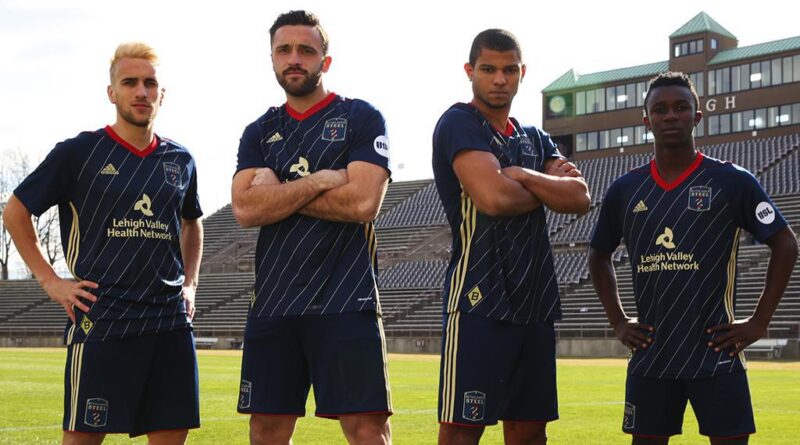
USL soccer arrived in Pennsylvania’s Lehigh Valley in 2016 through the MLS-USL development partnership, when the Philadelphia Union placed their reserve team in the region under the historic name of Bethlehem Steel FC. The branding resonated strongly with hardcore soccer audiences because it tapped into a largely overlooked era of American soccer history.
The original Bethlehem Steel FC (1907–1930) was one of the most successful clubs of the pre-World War II era. Founded out of a factory worker base in an immigrant-heavy industrial city, the club evolved into a professional powerhouse under owner Charles Schwab, attracting top players from the United States, England, and Scotland. Bethlehem Steel won the U.S. Open Cup five times, the American Cup six times, and multiple league titles across the fragmented early professional landscape before the Great Depression and the American Soccer Wars of 1928–29 brought that era to an end. By any historical standard, it remains one of the most successful early American clubs.
The modern USL version of Bethlehem Steel existed from 2016 to 2018 before the Union relocated the team to Chester and rebranded it as Philadelphia Union II. Matches were played at Goodman Stadium, Lehigh University’s football venue, which lacked lights for night games, forcing every home game to be played during the day. Despite the historical cache of the name, attendances were modest, and while a small but passionate fan base did form, the project never rooted itself deeply enough in the regional sports culture to generate sustainable crowds.
There was also a persistent perception that the Union were never fully committed to the Lehigh Valley as a long-term market. The eventual relocation and rebrand reinforced that view.
Other Minor League Success In Market
The case for revisiting the Lehigh Valley is less about theoretical population and more about observable sports behavior. The region is the third-largest metropolitan area in Pennsylvania after Philadelphia and Pittsburgh, consisting of Allentown, Bethlehem, Easton, and their surrounding towns, with a population of roughly 880,000.
More importantly, it is already a proven minor league sports market. The Lehigh Valley IronPigs (AAA baseball) and Lehigh Valley Phantoms (AHL hockey) consistently rank near the top of attendance in their respective leagues and have become deeply embedded in the regional identity. It is common to see IronPigs and Phantoms merchandise across the area, a sign of genuine civic adoption rather than niche interest.
The key distinction is not affiliation structure. Both the IronPigs and Phantoms are affiliated with major league parent clubs, yet they are treated locally as primary civic sports properties rather than temporary satellite projects. They launched in purpose-built venues as anchor tenants, have stable and committed ownership, and embraced the regional “Lehigh Valley” identity rather than tying themselves to a single municipality.
In short, the market has demonstrated that it will support affiliated lower division teams when they are locally embedded, regionally branded, and treated as permanent civic institutions rather than short-term reserve outposts.
Venue Options
Any serious USL return to the Lehigh Valley cannot rely on a college football stadium or a temporary rental solution. That lesson has already been learned.
A sustainable model would require a soccer-specific venue where the club is the clear primary tenant, scaled appropriately rather than oversized for the market. The goal should be atmosphere, control, and long-term identity rather than maximum theoretical capacity.
From a geographic standpoint, a centrally located site is essential in a tri-city region. Mirroring the regional accessibility strategy used by the IronPigs stands out as a logical move. If it is felt another small stadium in the Airport Road area off the Route 22 corridor between Allentown and Bethlehem would compete too much for the same events, a good alternative would be the Center Valley area near Routes 78, 309 and 378 which also offers strong highway access and a neutral location that does not overly favor any one of the region’s core cities.
The key factor is not just where the stadium is built, but how it is used. A venue where the club controls scheduling, branding, and matchday presentation creates a fundamentally different perception than being a tenant in a multipurpose facility designed for another sport.
What Needs To Be Different Next Time
First, the club must be locally owned and operated as part of its day-to-day identity, with visible and long-term ownership commitment. The Lehigh Valley is not an untested sports market. It is a mature minor league market that responds to stability, community integration, and sustained investment. A club positioned as a permanent regional sports institution, rather than a short-term project, would be entering a fundamentally different environment than Bethlehem Steel did. A fully independent club operating within the USL structure, rather than a reserve-team project tied to a parent organization, would also clearly distinguish a new effort from the last.
Second, the identity should reflect the region as a whole rather than a single city. The success of other local teams suggests that “Lehigh Valley” is the correct anchor, even if a historic name like Bethlehem Steel carries niche appeal among hardcore fans. Long-term viability in this market will be driven more by regional identity than by historical branding.
Third, the stadium cannot be an afterthought. A right-sized, soccer-first venue where the club is the primary tenant would immediately address many of the atmosphere, scheduling, and perception issues that defined the previous iteration.
Finally, USL League One may be the more appropriate entry point than the USL Championship. While the market size could support a higher division in theory, League One offers a more sustainable cost structure during the early years, especially as the league moves toward greater regionalization alongside a future promotion and relegation system. From a league perspective, a stronger northeastern footprint in League One would also provide scheduling and geographic balance. If the club establishes stable support and infrastructure, growth within the USL pyramid remains a realistic long-term pathway.
The Lehigh Valley is not a market that failed. It is a market that was never given a fully committed, properly aligned professional club in the first place.
