
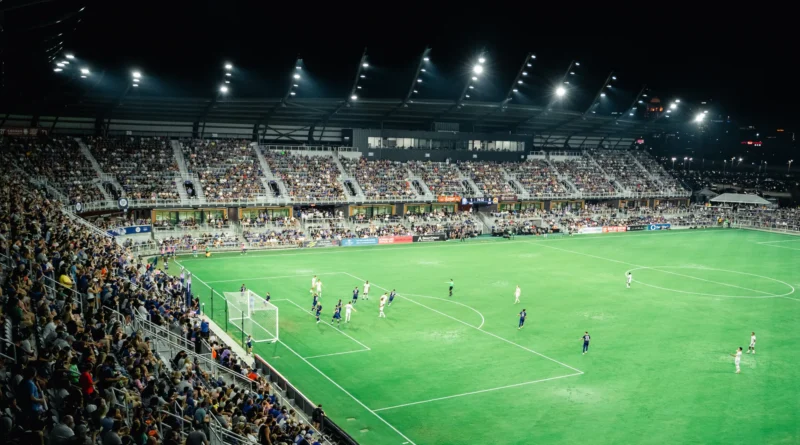
USL Premier 2028: Tiering Every 2026 USL Championship Club by Launch Readiness
Earlier this month we looked at which markets might fit USL Premier’s expansion slots. This is the companion piece, focused on the clubs already in the USL Championship as of 2026 and which ones are best positioned to be in the first wave of “move-ups” for a 2028 Division I launch. USL has said USL Premier is scheduled to launch in 2028.
This is not a power ranking. It is an attempt to map today’s USL Championship landscape onto the USSF Division I Professional League Standards (PLS), with the realistic caveat that waivers exist and are explicitly contemplated in the standards themselves.
The core PLS factors that keep showing up in every conversation are straightforward:
-
Market footprint: at least 75% of a Division I league’s teams in metro areas of 1,000,000+
-
Stadiums: enclosed, minimum 15,000 seats
-
Ownership: principal owner net worth requirements (and related financial capacity standards)
-
Waivers: temporary waivers are possible, one-year at a time, for good cause
With that methodology, here is a tier for every 2026 USL Championship team.
Tier 1: Clear fits for the initial launch
These clubs either meet the hardest standards now or have a near-term, credible path that lines up with a 2028 launch.
Louisville City FC
Louisville is the cleanest “plug-and-play” club in the Championship for a Division I launch. Lynn Family Stadium is already above the 15,000-seat mark, which matters because stadium compliance is usually the gating item before anyone even argues about anything else. Louisville’s other advantage is less visible but just as important: institutional maturity. They have operated for years like a top-tier independent club with stable fan demand, consistent operations, and an ownership group that behaves like it is building an asset, not renting a season.
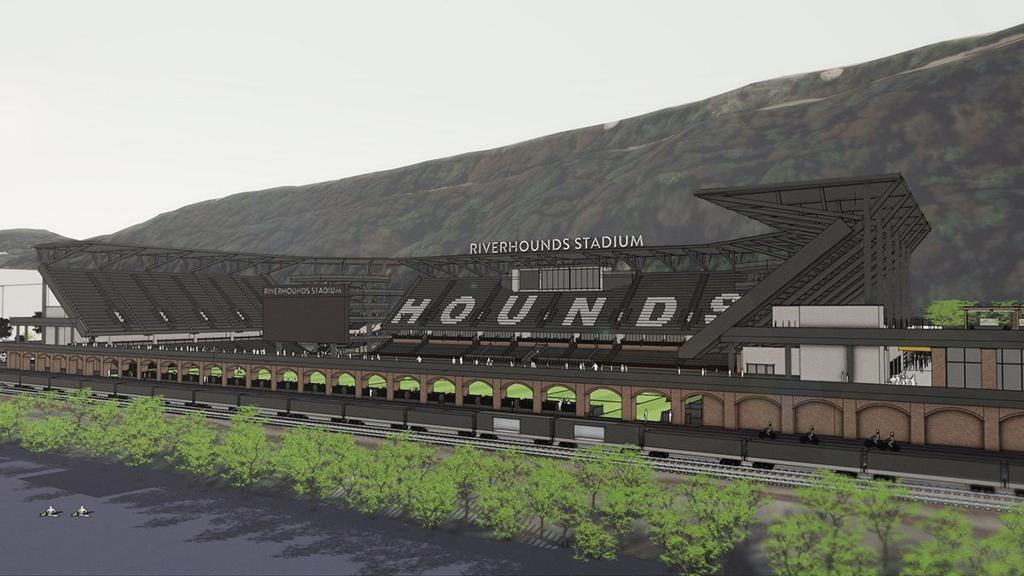
Pittsburgh Riverhounds
If you want the textbook example of a club responding directly to PLS, Pittsburgh is it. Their current stadium is well short of the standard, but the club has publicly announced a planned expansion aimed at reaching 15,000 seats and explicitly tied that to Division I ambitions. Pittsburgh also checks the geographic and market logic boxes for a national league. The most important thing here is not that they meet every requirement today. It is that they are behaving like a club preparing to be measured against them.
Detroit City FC
Detroit’s case is simple: the biggest structural weakness has been stadium scale, and the club has a concrete plan to address it. The announced 15,000-seat stadium project targeted for 2027 aligns almost perfectly with a 2028 launch window, which is the kind of timing that makes waivers feel less like a loophole and more like a bridge. Detroit also benefits from being in a major market where Division I optics, sponsorship potential, and media reach are naturally stronger than the typical lower-division baseline.
Oakland Roots
Oakland’s near-term venue at the Coliseum fulfills the 15,000-seat requirement immediately, even if the club is using a configured soccer capacity rather than the full building. The long-term story is what makes Oakland even more compelling: the Roots have been connected to the Howard Terminal redevelopment process, with reporting that the club has been selected as a finalist tied to that site’s future. In a Division I launch, a major market plus a usable large venue plus an active stadium pathway is exactly what a league wants.
Sacramento Republic FC
Sacramento’s candidacy is significantly stronger than a typical sub-15,000-seat club due to the Railyards stadium already under construction with a 2027 opening timeline and reported paperwork filed to allow expansion from roughly 12,000 to about 20,000 seats. This positions the club as building a scalable, privately financed venue in a strong California market rather than operating from a fixed-capacity facility. While the initial configuration may fall short of the 15,000-seat PLS benchmark without a waiver, the active expansion pathway and aligned timeline make Sacramento one of the most credible Tier 2 candidates and a plausible early inclusion if waivers are granted to clubs demonstrably progressing toward full compliance.
Atlético Dallas
Dallas appears tailor made for Division I out of the gate. They have made a statement coaching hire and the Cotton Bowl answers the stadium question immediately. The Dallas Fort Worth metroplex answers the Central Time Zone footprint question for the league as a whole. In a world where USL Premier needs to look and feel national on Day 1, Dallas does a lot of work for you. The remaining question is not “can they meet PLS.” It is “how quickly can the organization build Championship-level stability and credibility around the on-field product and business operations,” which is a different kind of risk than stadium capacity.
Tier 2: Plausible candidates with gaps to close

These clubs have meaningful strengths, but each has at least one major PLS-related variable that needs either a plan, an alternate venue solution, or a waiver bridge.
Phoenix Rising FC
Phoenix has an established club profile, but a stadium below the 15,000 threshold. Phoenix already operates a soccer-specific venue and has long positioned itself as a flagship Western club inside USL. The path to USL Premier is pretty clear conceptually: either expand, relocate within the market to a compliant venue, or rely on a waiver while a compliant plan is implemented. Phoenix is not a “small stadium club.” It is a “big market club waiting for a stadium scale solution.”
Miami FC
Miami’s position improves a lot once you separate “long-term venue ambitions” from “current PLS viability.” The club currently plays at FIU’s Pitbull Stadium, which is comfortably above 15,000 seats. Their Homestead stadium plan is still significant because it offers the kind of controlled, purpose-built stability that clubs chase, with Miami FC publicly unveiling a 15,000-seat stadium as part of a broader development project. If Homestead slips, Miami is not automatically disqualified. They already have a compliant building in the market. The main issue with Miami FC as always is the fan base. Unlike most clubs we are putting in Tier 1 and Tier 2, Miami FC has never really maintained strong attendances which could create bad optics in the early days of USL Premier, if they are one of the initial clubs that gains entry by means other than merit-based promotion.
Indy Eleven
Indy’s story is the stadium story. Their current soccer venue is not at the 15,000 standard, which keeps them out of Tier 1. The reason they stay Tier 2 is that Indianapolis is a strong market and the club has an obvious “alternate stadium” option in the city. Lucas Oil Stadium, which has been home to the Indy Eleven before, could solve capacity quickly if needed. That does not mean it is ideal, but it matters in a launch environment where being able to host Division I games in a compliant building can buy time for long-term plans to stabilize. It may make more sense for Indy Eleven to wait until they sort out their permanent stadium.
Rhode Island FC
Rhode Island FC benefits from a modern, soccer-specific home in Centreville Bank Stadium, but the venue currently seats roughly 10,500 and falls well short of the 15,000-seat PLS benchmark. While the stadium is part of a larger mixed-use development and there have been general references to future expansion potential, there is no clearly defined public plan or filed phase to scale the venue to Division I capacity. This distinguishes Rhode Island from clubs like Sacramento that are actively planning stadium expansion during construction. As a result, the club profiles as a waiver-dependent Tier 2 candidate: strong ownership backing and new infrastructure, but without a confirmed expansion pathway that guarantees full compliance by a 2028 launch.
Tier 3: Structurally unlikely for the initial launch under current standards
These clubs have real strengths, but the gap between “what they are today” and “what PLS asks for on Day 1” is large enough that inclusion in the first group feels unlikely without a major, near-term change.
San Antonio FC
San Antonio has a big-market argument and a stable club argument. The problem is stadium scale. Toyota Field is under 10,000, which is nowhere near the Division I minimum. Yes, the Alamodome exists in the market, and it is enormous. But alternate stadium availability is not the same thing as a realistic plan to use it as a home solution. In a Division I launch, it is hard to justify “maybe they could play in the dome” as a core strategy unless the club is actually signaling that direction.
Tampa Bay Rowdies
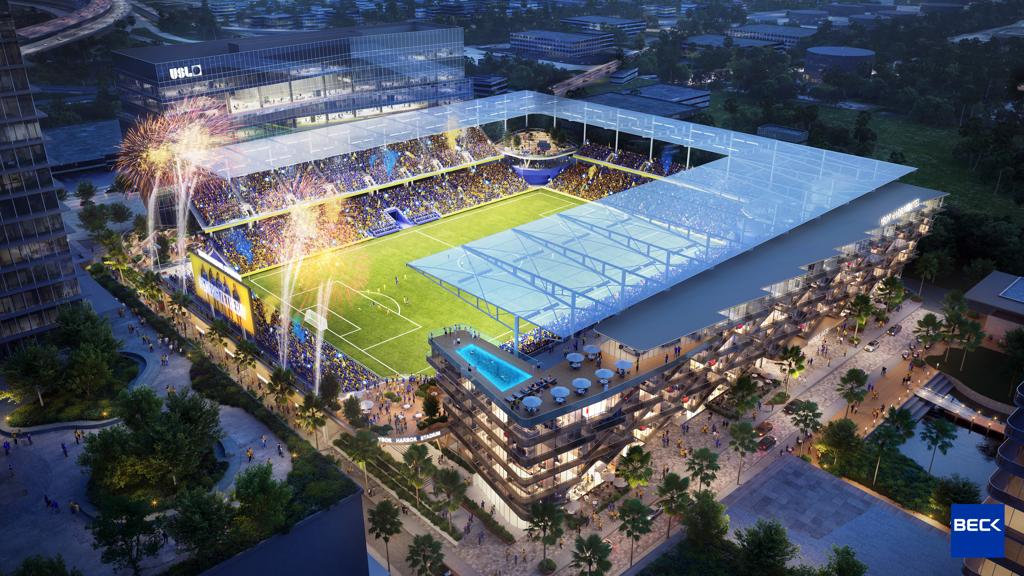
Tampa Bay has the kind of market a Division I league wants, and the Rowdies brand has long been part of the USL ecosystem. Their current issue is the same as San Antonio’s: the home venue is far below the threshold, with Al Lang listed at a little over 7,000. The interesting wrinkle is the USL Super League’s Tampa Bay Sun is building a 15,000-seat stadium concept at Ybor Harbor. If a credible agreement emerged that allowed the Rowdies to play there, perhaps brokered by the Tampa-based USL league office, the Rowdies’ Premier profile would change fast. Right now it is still hypothetical.
New Mexico United
New Mexico is the easiest club in the Championship to argue with your heart. It is also one of the harder ones to justify analytically as a 2028 launch member because the stadium pathway has run into legal hurdles that create timeline uncertainty. Their current venue is also below 15,000. This is not a “they do not have fans” problem. It is a “can you guarantee infrastructure alignment inside a fixed launch window” problem. If the legal issues clear and a compliant venue path becomes concrete, New Mexico is the kind of club that can jump tiers quickly.
Sporting Club Jacksonville
Jacksonville is important to handle carefully because the story is not “small stadium.” It is “big ambition, early phase.” The club is playing at Hodges Stadium to start in the USL Championship. The long-term plan being discussed publicly is more ambitious, with reporting that Sporting Jax is pursuing a 15,000-seat stadium project, but it is still early and not yet a delivered asset. In PLS terms, Jacksonville’s challenge is not design. It is execution and timing. Until the stadium is real, this is not a safe “first wave” inclusion.
Tier 4: Waiting for merit-based promotion
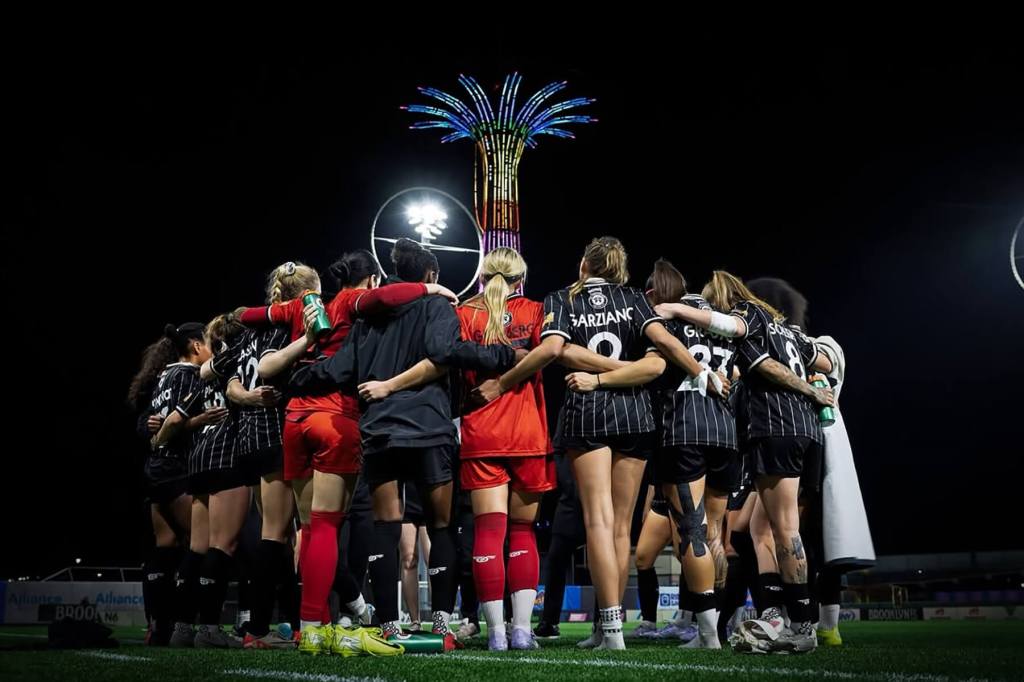
This tier is not a dismissal. It is the point of the whole exercise.
If promotion and relegation is implemented as promised, then not being in the starting group does not mean “never.” It means “not yet,” because the pathway is supposed to become sporting merit plus institutional growth.
Here are the rest of the 2026 USL Championship clubs, each with the short version of why they are Tier 4 under a strict PLS lens today.
Birmingham Legion FC
Birmingham has a venue advantage because Protective Stadium is certainly big enough, and that matters in a compliance discussion. The missing piece is whether the club’s long-term operating model is aligned with Division I expectations, including sustained demand and ownership-level ambition. If USL needed a stadium-compliant bridge club, Birmingham can host games. The question is whether the organization is building toward Premier or simply stable in Championship.
Brooklyn FC
Brooklyn is the purest example of “market strength versus infrastructure reality.” The New York metro is strategically attractive, but Brooklyn’s listed home is Maimonides Park at 7,000, which is not even in the same conversation as a 15,000-seat Division I requirement. Building in New York City is challenging, and the club’s branding specifically limits it to finding a stadium-sized parcel of land and getting approvals to build in Brooklyn. Aviator Sports & Event Center might be the most attainable spot for a stadium project, but its limited access by public transportation (no subway stops nearby) introduces other challenges even if a deal there could be landed. The other New York metro area clubs in the USL structure – the Cosmos and Westchester SC – would also need stadium expansion or another stadium solution before any New York-based Premier inclusion becomes plausible.
Charleston Battery
Charleston is one of the best-run clubs in lower-division soccer, full stop. The issue is that Patriots Point is 5,000. Charleston’s “Tier 4” status is structural, not cultural. In a pro-rel future, the path is clear in theory: expand or relocate to a PLS-aligned venue as sporting results and business growth justify it.
Colorado Springs Switchbacks
Colorado Springs has a good local identity and a stadium that fits the Championship ecosystem well. Weidner Field is 8,000, which is the entire problem in a Division I standards discussion. Without an expansion plan to 15,000 or a larger alternate venue strategy in-market, the club is a merit-based promotion candidate rather than an initial Premier fit.
El Paso Locomotive FC
El Paso is a strong regional sports market with clear local traction, but the stadium situation is a limiting factor. Southwest University Park is under 10,000, and while it is a great venue for the Championship, it does not meet the Division I threshold. The path forward is the same as most Tier 4 clubs: a stadium scale plan, paired with sustained business growth, then let pro-rel do its job.
FC Tulsa
Tulsa has a respectable operating profile, but ONEOK Field is under 8,000. In other words, the club can be very healthy in the Championship without being anywhere close to PLS compliance. If USL Premier is designed to be reachable for more markets, Tulsa is exactly the kind of club that benefits from merit-based promotion over time, assuming infrastructure investment follows.
Hartford Athletic
Hartford’s stadium capacity is the entire issue. Trinity Health Stadium is listed at 5,500, which is far off the Division I mark. The market itself is also complicated by proximity to larger regional markets. Hartford can absolutely be a good USL club. To be a Premier club, they would need a major venue and business-model shift.
Las Vegas Lights FC
Las Vegas is the kind of market that looks like an obvious Premier target on a map. The complication is that Cashman Field is under 10,000 and the club’s long-term stadium pathway has never felt settled. Vegas is the rare Tier 4 club where the market is strong enough that, if a stadium solution emerged, the club could jump tiers quickly.
Lexington SC
While market size and stadium capacity make it a non-starter for USL Premier out of the gate, Lexington is showing ambition with its roster and appears to have the makings of the type of smaller town club that punches above the weight of its market-size and earns its way to the top flight within a pro-rel system.
Loudoun United FC
Loudoun has a regional market advantage, but Segra Field is listed at 5,000. That is an enormous gap under the standards. If Premier is meant to be accessible beyond the biggest markets, Loudoun would still need a major facility step. Until then, they are structurally a Championship club that would have to earn and build its way upward.
Monterey Bay FC
Monterey Bay’s challenge is scale. Cardinale Stadium is 6,000, and the market is not a major metro in the way the PLS footprint requirement prefers for a Division I league. That does not make the club irrelevant. It simply means the club’s Premier pathway is likely a long-term pro-rel story that requires either expansion within the market or a broader regional strategy.
Orange County SC
Orange County is located in a strong Southern California media environment, but Championship Soccer Stadium is 5,000. The market is not the issue, the facility is. If a larger venue pathway existed, OC could be a more serious Premier discussion. Without it, the club is exactly what the Championship is supposed to support.
USL Championship expansion groups & dormant clubs
We will stick to the potential expansion clubs listed on the USL Championship’s teams page plus North Carolina FC. Milwaukee, Reno, Santa Barbara, Iowa, and Oklahoma City would belong in Tier 4 for now, not because they cannot become Premier-caliber, but because they all have a ways to go to become a reality. We have seen expansion efforts fade away before. Milwaukee and Oklahoma City are major league markets in other sports, but it will come down to execution. Regarding North Carolina FC, they expressed interest in Division I before going dormant in Division II. While it is possibly they re-emerge stronger than ever, it seems unwise to count on that.
Closing thought
The real beauty of a promotion and relegation structure is that these tiers are only a snapshot, not a permanent hierarchy. Launch selection is about infrastructure readiness, market footprint, and standards compliance in a fixed timeline. Once the pyramid is operational, sporting merit is supposed to take over. A USL Championship club can earn its way into USL Premier on the field, just as a USL League One club could theoretically climb through the system over time.
This analysis, then, is less about long-term worthiness and more about launch logistics. A new Division I league has to satisfy stadium, market, and ownership standards immediately to earn sanctioning, even if credible short-term waivers are applied to clubs actively closing those gaps. There is global precedent for this kind of approach. In England, promoted clubs are often granted conditional dispensations to upgrade facilities within defined timelines rather than being expected to achieve full compliance overnight.
That distinction is important. The set of clubs that launch with USL Premier in 2028 will likely reflect who can realistically meet or approach the Professional League Standards in time for that season, not who “deserves” to be there forever. The ecosystem USL is proposing is fundamentally different from the type of closed franchise model around which the PLS are designed. If implemented as described, the first group of USL Premier clubs would simply be the starting point, while the long-term composition of the league would be shaped by results on the field, infrastructure investment, and the ability of ambitious clubs at every level to grow into higher standards over time.
